

The Stud
A fortunate crossroads of destinies
Mario and Clarice Incisa della Rocchetta are united by a great passion for thoroughbred horses that proceeds their passion for wine. This passion, as well as their encounter with Tesio gave rise to the Dormello-Olgiata stud farm and the myth of Ribot.
Ribot was not only, together with Nearco, the greatest bearer of the Dormello Olgiata breed but he was also the greatest champion of the last century, who was able to win the enthusiasm of even the least enthusiastic, contributing to the pride of being Italian in a dark period of history.
Ribot was not only, together with Nearco, the greatest bearer of the Dormello Olgiata breed but he was also the greatest champion of the last century, who was able to win the enthusiasm of even the least enthusiastic, contributing to the pride of being Italian in a dark period of history.
Origins
“This is what makes Ribot unique. His international fame, his style, the passion he has sparked in each of us has meant that today, even a stranger to racing can recognise a great horse in the name of Ribot. ”
Nicolò Incisa della Rocchetta


Origins
Federico Tesio and The Tesio - Incisa Company
The birth of the Dormello Olgiata breed
After finishing his studies at the Real Collegio di Moncalieri in Piedmont, a young Tesio set off on a world tour that lasted roughly six years. He often talks about China and says that he rode in the Peking Derby. He often tells of his journey through Patagonia, crossing lands he had never visited, to visit one of his teachers and astronomer Father Francesco Denza
On his return home, he married Lydia Fiori di Serramezzana, and in 1896 invested all his money in a stud farm. Dormello, on the shores of Lake Maggiore, was chosen for its temperate climate.
The first results came early. He won his first Italian Derby in 1911 with Guido Reni. Between 1904 and 1966 Tesio and his stable, which would later be called Razza Dormello-Olgiata, won 24 times the Italian Derby, an unbeaten record to this day.
He met Mario Incisa della Rocchetta and his wife Clarice in 1932. The horses that had previously been under the name of Tesio, now ran as Tesio - Incisa, and later raced under the colours of the Dormello-Olgiata breed, a name derived from the two estates where the horses stayed.
The first version was a blue jacket, St Andrew’s cross and red cap, before the jacket became white. The current colours of the Dormello - Olgiata are red and white.
On his return home, he married Lydia Fiori di Serramezzana, and in 1896 invested all his money in a stud farm. Dormello, on the shores of Lake Maggiore, was chosen for its temperate climate.
The first results came early. He won his first Italian Derby in 1911 with Guido Reni. Between 1904 and 1966 Tesio and his stable, which would later be called Razza Dormello-Olgiata, won 24 times the Italian Derby, an unbeaten record to this day.
He met Mario Incisa della Rocchetta and his wife Clarice in 1932. The horses that had previously been under the name of Tesio, now ran as Tesio - Incisa, and later raced under the colours of the Dormello-Olgiata breed, a name derived from the two estates where the horses stayed.
The first version was a blue jacket, St Andrew’s cross and red cap, before the jacket became white. The current colours of the Dormello - Olgiata are red and white.


Origins
The glorious stud Dormello - Olgiata
Ribot, the search for the perfect horse.
Ribot’s predecessors, Cavalier d’Arpino, Bellini and his father Tererani, were all great champions. Nearco was among this group. Born in 1935, he represented perfection for Federico Tesio, as he combined his skills in winning races with those of breeding. Nearco is an extraordinary patriarch because of the great quality he has succeeded in imprinting on the horses that bear his blood. His importance is clear and extraordinary. The perfect synthesis was achieved with Ribot, considered “the strongest horse in the world”, who is a marvel for his breeding capacity and temperament that dictated the decisive impetus in races.

What Tesio was looking for was a horse that could win over all distances. Ribot was the crowning achievement of that search; however, unfortunately, he was unable to see his triumph”.
Nicolò Incisa
Nicolò Incisa

History
The horse of the 20th century
RIBOT BECOMES AN EXAMPLE TO BE COMPARED AGAINST
Undefeated in 16 races, he won the King George VI and Queen Elizabeth Stakes and the Arc de Triomphe twice. On 26 July 1999, in the Racing Post, an English horse racing newspaper, Tony Morris wrote:
‘The field starters at the 156 Arc de Triomphe were considered the strongest to date. Among Ribot’s challengers were the best horses from England, France, Ireland and America […] But for all that talent put up against him there was no match’.
Ribot beated his rivals in the straight, leaving them in place like a bullet fired from a rifle. Many people present that day had the impression that they had seen the horse of the century. Ribot became the benchmark by which other aspirants must measure themselves by.
Federico Tesio died on 1 May 1954, unable to see the glory of Ribot, dubbed the horse of the 20th century.
‘The field starters at the 156 Arc de Triomphe were considered the strongest to date. Among Ribot’s challengers were the best horses from England, France, Ireland and America […] But for all that talent put up against him there was no match’.
Ribot beated his rivals in the straight, leaving them in place like a bullet fired from a rifle. Many people present that day had the impression that they had seen the horse of the century. Ribot became the benchmark by which other aspirants must measure themselves by.
Federico Tesio died on 1 May 1954, unable to see the glory of Ribot, dubbed the horse of the 20th century.
History
The training centre in Bolgheri
Mario Incisa is in charge
The Olgiata property was refurbished by Mario Incisa and his wife Clarice, where the great horses like Ribot, Botticelli and Braque, all worked as stallions. Then the Olgiata property was sold and in the cold season the thoroughbreds were moved from the cold Dormello to the bright Bolgheri. A magnificent training centre was built here with a track running alongside the Carducci’s cypresses. For Mario Incisa, the human touch has absolute value in the management of a farm. He personally oversees the decorum of the premises and ensures the satisfaction of the people working there. Tesio had a deep knowledge of horses and their genealogies, Incisa follows in his footsteps and keeps the horses at the very highest level.


The History
The new generation: Enrico, Orietta, and Nicolò Incisa della Rocchetta
The passion of the children
After the death of Federico Tesio, the Dormello-Olgiata breed continued to win under the leadership of Mario Incisa della Rocchetta.
The three children of Mario Incisa, Enrico, Orietta and Nicolò are driven by the same passion as their father and play an important role in the development of Dormello-Olgiata.
Today Nicolò Incisa, Mario’s third son is responsible for the stables. He possesses his father’s qualities: a charming temperament, a subtle irony, the ability to look far into the future, and of course, a love for thoroughbreds.
In 1962 John Hislop, breeder and owner of the world champion Brigadier Gerard, wrote in the preface of a book on the Dormello - Olgiata breed:
: "When those of my generation come to be asked by their grandchildren 'Who was the greatest breeder, the outstanding sire, the best racehorse of your time?' the answer will probably be 'Tesio, Nearco, Ribot'."
More than 40 years on, that probability has become a certainty.
The three children of Mario Incisa, Enrico, Orietta and Nicolò are driven by the same passion as their father and play an important role in the development of Dormello-Olgiata.
Today Nicolò Incisa, Mario’s third son is responsible for the stables. He possesses his father’s qualities: a charming temperament, a subtle irony, the ability to look far into the future, and of course, a love for thoroughbreds.
In 1962 John Hislop, breeder and owner of the world champion Brigadier Gerard, wrote in the preface of a book on the Dormello - Olgiata breed:
: "When those of my generation come to be asked by their grandchildren 'Who was the greatest breeder, the outstanding sire, the best racehorse of your time?' the answer will probably be 'Tesio, Nearco, Ribot'."
More than 40 years on, that probability has become a certainty.

People
TODAY’S CHAMPIONS AND THEIR CUSTODIANS
Where thoroughbreds train and race
On Nicolò Incisa’s side, since 2016 has been Franca Vittadini, stable and racing manager, horse rider and breeder, and owner of the Beech House Stud in England, where Nearco was a stallion and is still buried.
In 2019, an extraordinary result occurred with Lamaire winning the Oaks of Italy, the most important group race for three-year-old females. Badram, Ornais won the Listed races of 2020 and 2021.
To date, the training centre houses around 30 thoroughbreds.
In 2019, an extraordinary result occurred with Lamaire winning the Oaks of Italy, the most important group race for three-year-old females. Badram, Ornais won the Listed races of 2020 and 2021.
To date, the training centre houses around 30 thoroughbreds.


People
Attending with professionalism
Care before and after the race
The foals are born in England, Ireland and France and after weaning are brought to Italy to Dormello and then to Bolgheri when ready for taming and training.
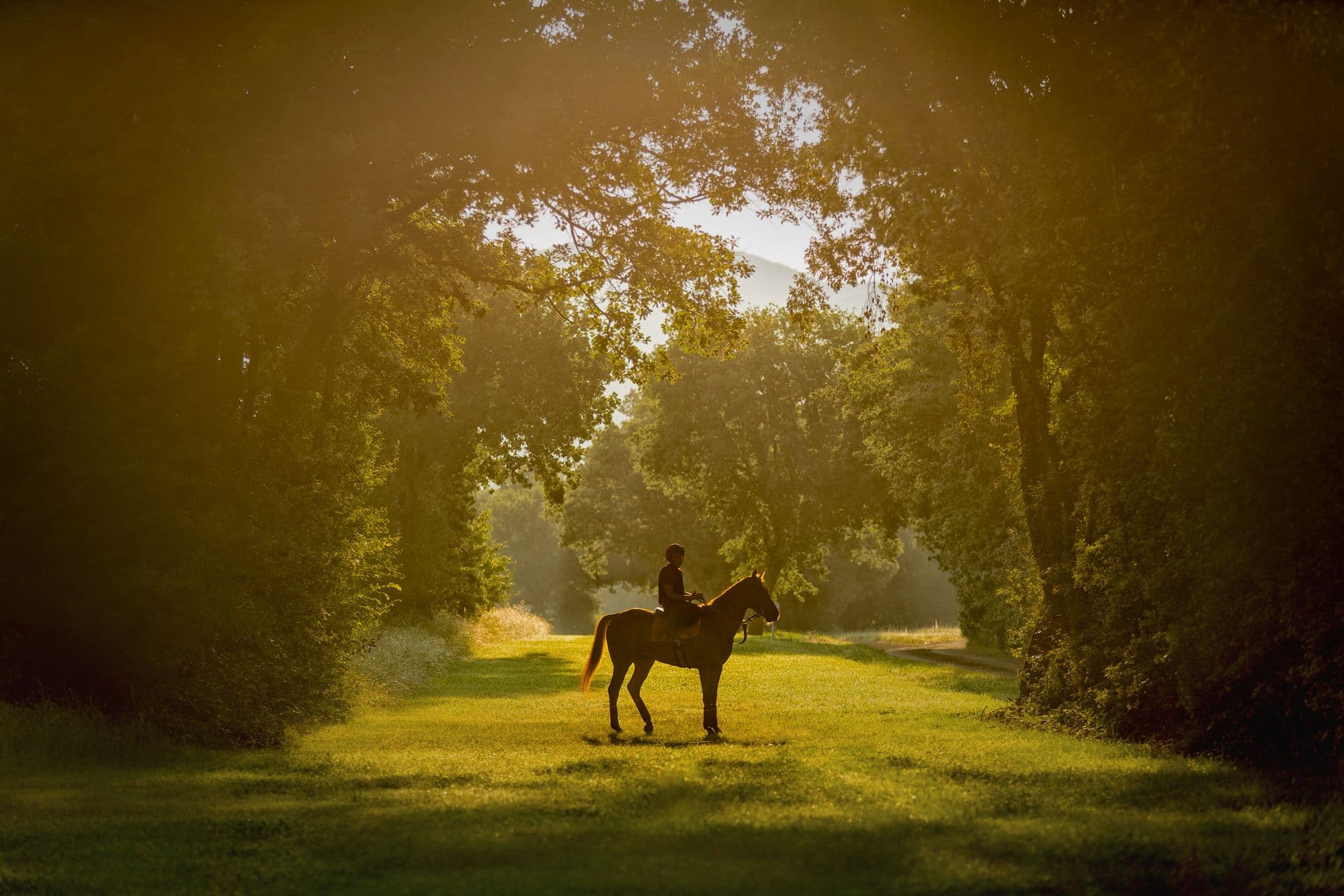
The Dormello - Olgiata horses train and gallop in an almost magical landscape, far from the hustle and bustle of city racecourses and after the rush of the race, return to the people who care for them with unconditional love.
The Dormello - Olgiata horses train and gallop in an almost magical landscape, far from the hustle and bustle of city racecourses and after the rush of the race, return to the people who care for them with unconditional love.
